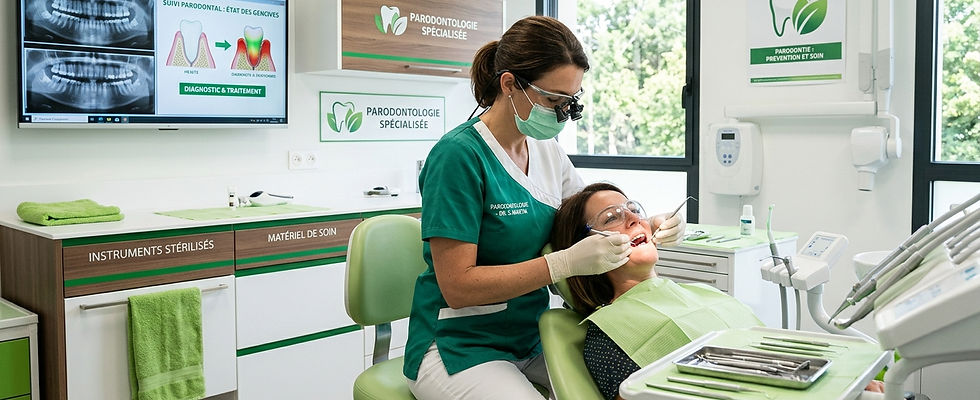
What holds your teeth in place
Each tooth is held in place by supporting tissues: the gum, the bone and the ligament that connects the tooth to the bone. Together they are known as the periodontium. When these tissues are affected by a bacterial infection, we speak of gum disease (periodontal disease). It starts with inflammation of the gum (gingivitis) and, if it is not treated, can reach the bone and ligament (periodontitis).
To understand the difference between the two, read our dedicated article on the blog.
Warning signs
-
red, swollen gums, or gums that bleed when you brush;
-
persistent bad breath;
-
receding gums, teeth that look longer;
-
teeth that move or shift;
-
new gaps between the teeth.
Gum disease can progress without pain: the absence of pain doesn't mean that everything is fine. Only an examination can tell.
How treatment works
1. Assessment
Examines your gums & measures the depth of the space between the gum and the tooth.
2. Deep cleaning
Cleaning thoroughly below the gumline, around the roots, to remove deposits and bacteria.
3. Regular follow-up
Regular check-ups and careful maintenance at home are essential.
4. Surgery
When deep cleaning is not enough, surgery may be considered.